

Daniele Ricci
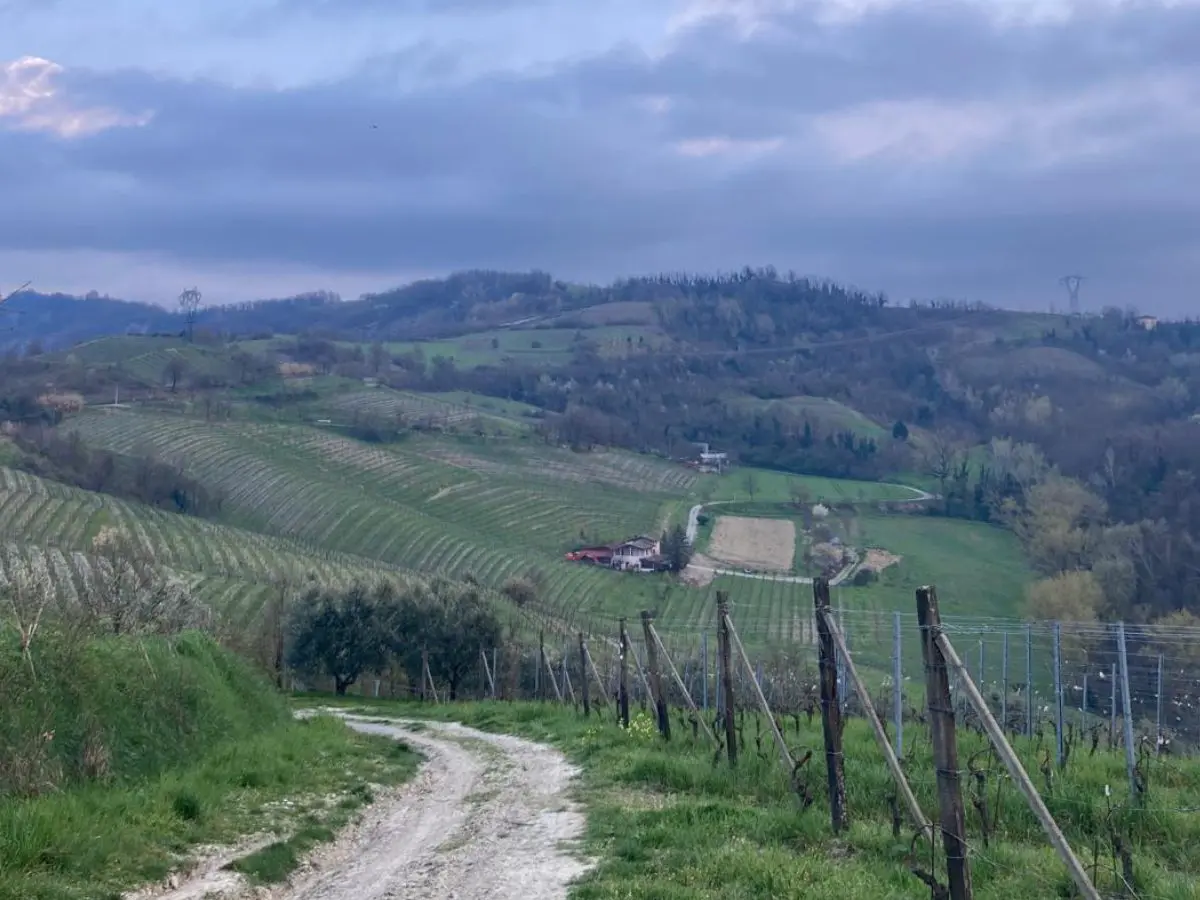
In the low hills of the Colli Tortonesi, where Piedmont’s white marl soils have shaped wine for a century, Daniele Ricci is regularly credited with helping revive Timorasso — the once-forgotten white grape of Tortona — and for building one of Italian natural wine’s most distinctive, if quietly stubborn, estates. For years Ricci worked a day job as a highway toll-booth operator, tending the family’s vines at Cascina San Leto on the side. A health scare and the birth of his son pushed him to make a choice, and by the early 2000s he had left the tollbooth for good to farm and make wine full time. Cascina San Leto has belonged to the Ricci family since 1929, when Daniele’s grandfather Carlo first planted vines on this stretch of Tortonian marl in Costa Vescovato, in the province of Alessandria. What began as a few hectares has grown, over three generations, into a holding of roughly ten hectares under vine — planted mainly to Timorasso, alongside Barbera, Croatina, Nebbiolo and Cortese. The farmhouse itself still doubles as a small weekend agriturismo, run as a family affair, which keeps the estate rooted in the rhythm of a working farm rather than a showcase winery.
Ricci describes his own approach as a kind of experimentation of the contrary: rather than accepting convention, he tests it, often by doing the opposite and seeing what the vines tell him. He converted the estate to organic farming, completing certification around 2018, but pointedly leaves the certification logo off his labels — independence from institutions, including formal natural wine associations, is part of his identity as a winemaker. In the vineyard that translates into restraint: only copper and sulfur where necessary, careful canopy management to shield fruit from heat, and a harvest call based on feel as much as data, picking when the seeds turn “crispy” rather than by the calendar.
In the cellar, Ricci is best known for pushing Timorasso — traditionally vinified as a structured, age-worthy white — through the techniques of red winemaking. Grapes ferment spontaneously with indigenous yeasts, often macerating on their skins for 90 to 100 days, sometimes in 1,000-liter terracotta amphorae buried directly in the vineyard, with little to no added sulfur. The results are deeply colored, tannic, savory orange wines that bear names as forthright as the man himself: “Giallo di Costa,” “Io cammino da solo” (“I walk alone”), and “Come un cane in chiesa” (“like a dog in church”) — each label doubling as a small manifesto. Alongside these sit more classical Timorasso bottlings under the San Leto name, together with reds built on Barbera, Croatina, and Nebbiolo.
Today Ricci’s son has joined him at Cascina San Leto, carrying the estate into a fourth generation without softening its edges. Nearly a century after Carlo Ricci first put vines in this ground, the family’s wines are still made the way Daniele always insisted they should be — on his own terms, one contrary experiment at a time.
With all of this in mind, we view it as essential that those who recommend our wines take the care to convey our working philosophy, so that whoever acquires our products will be able to acquire as well a little love for the most beautiful work in the world.
Getting there: